Showing posts with label art tours. Show all posts

Sunday, May 8, 2016

Mother's Day 2016

Grant Wood, Hattie Weaver Grant, 1929


Happy Mother's Day to you and yours.  This blog post is dedicated to my mother, Mildred Gersh, who gave me a love for art through our many visits to museums.  Thank you, Mom.

Please make visits to museums a frequent and pleasant experience for your family.  Take your children and grandchildren to a museum for a short time - an hour or so.  Not too long.  Just enough time to whet the appetite for more, another day. 

Also, have the children select a reproduction in the bookstore as a souvenir of the trip to the museum. The purchase not only supports the museum, it also extends the experience past the doors of the museum and into one's personal space, one's comfort zone.

I urge you to frame these museum reproductions so that they hang in the child's bedroom, creating a personal connection that will last a lifetime.

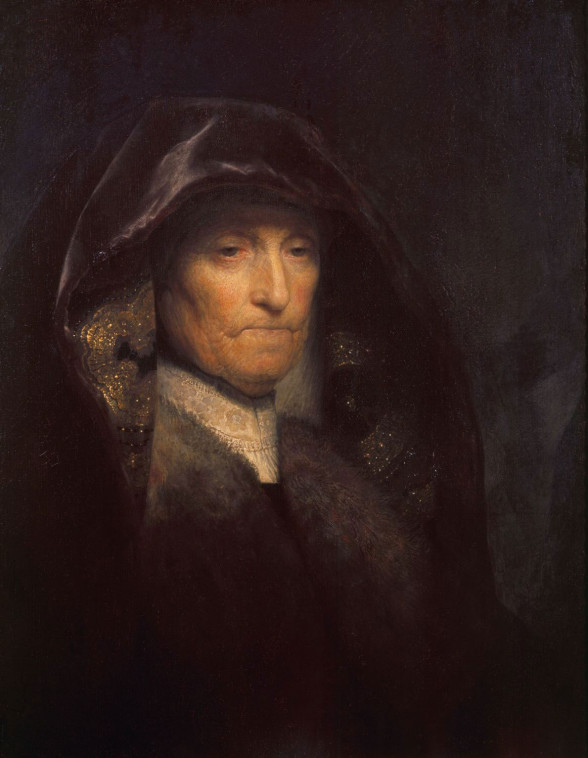
Rembrandt van Rijn, Neeltgen Willemsdochter van Zuytgbrouch. van Rijn, 1629

Rembrandt's mother's face is familiar to us through other works wherein she served as his model.


Vincent van Gogh, Anna Cornelia Carbentus van Gogh, 1888

Almost smiling, Anna van Gogh seems to listen intently.  She provided solace for her son when he was at odds with his father. An artist in her own right, she too studied art and drew plants and flowers in notebooks. 


Andy Warhol, Julia Justine Zavacka Warhola, 1974

Julia Warhola is truly the Mother of Pop Art.  Her charming European script graces most of Andy Warhol's early works, such as the greeting cards and clever books. Examples of her work are currently on view at the Morgan Library in the exhibition Warhol by the Book, closing on May 15th. 

For other artists' mothers place click on this link.  

And please check out our Mother's Day Special: private tours for $250 per group, if you book by June 1st. Tours will be conducted this summer.  Reservations at nyarts.exchange@verizon.net

Happy Mother's Day to you and yours - 
Beth New York

Beth S. Gersh-Nesic, Ph.D.
Director
New York Arts Exchange.


Sunday, May 1, 2016

Last Call: Miriam Schapiro, A Visionary, at the National Academy through May 8th.

Miriam Shapiro and Sherry Brody, Dollhouse, 1972

Miriam Schapiro (1923 - 2015) was one of the founding member of the Feminist Art Program at California Institute of the Arts (CalState), in Los Angeles, in 1971, based on the Women's Art Program at Fresno State College, founded in the previous year.  Schapiro and Judy Chicago (b. 1939) led the team of artists who created Womanhouse (1972) with Faith Wilding, Mira Schor, among dozens of others. Miriam Schapiro was a major influence on the feminist art movement, earning this activist artist a permanent place in art history as a trailblazer and visionary (hence the title of the show).


Miriam Schapiro, Lady Gengi's Maze, 1979

The current retrospect at the National Academy Museum and School summarizes her characteristic contributions. Beginning with her early Abstract Expressionist work that transitioned into her hard-edge Shrine series, this modest selection of her works serves as a fitting memorial for this a highly gifted artist who also ushered in the Pattern and Decoration Movement.   


Miriam Schapiro, My History, 1987


Sadly, the National Academy has announced that it will close permanently on June 1st, explained by the director Maura Reilly on its Museum. Therefore, please make a special effort to visit this marvelous Miriam Schapiro show accompanied by three other fine exhibitions:

An American Collection, through May 8th


Method Order Metrics, through May 8th


Tony Rosenthal, Alamo, 1967 (model for the Astor Place "cube")


And Contemporary Highlights from the Collection, through May 8th


The National Academy was founded in 1825 by American Academy artists Asher B. Durand, Samuel F. B. Morse, Thomas Cole, Rembrandt Peale and Ithiel Town.  At first homeless, its original home was on Fourth Avenue and 23rd Street in late 1800s.  Then it sold the building to Met Life in 1899, was homeless again and then moved into the Archer Milton and Ann Hyatt Huntington mansion on Fifth Avenue between 89th and 90th Streets in 1942. Time to move on again . . . . .

Happy May Day -  and please follow us on Intagram  and Facebook :)
Beth New York

aka Beth S. Gersh-Nesic, Ph.D.
Director, New York Arts Exchange


Friday, January 1, 2016

Happy New Year 2016


Wishing you joy, peace and good health in the year ahead and beyond -

May the force be with you!

The New York Arts Exchange

Friday, June 19, 2015

Last Call: Yinka Shonibare closes at James Cohan June 20 - come join us for a farewell tour

Yinka Shonibare, Rage of the Gods, 2015
James Cohan Gallery, 533 West 26th Street, NYC


Yinka Shonibare has decided that the gods are not crazy, but mad! They rage at our abuse of the planet's bounty. Mortalized into female form, the artist drives his point home through the glamour and grace of ballerinas accompanied by lethal weapons: a gun, a knife and a sword. The effect is classic Shonibare, a theatrical seduction delivering a serious exhortation: "People get real, stop ruining the earth."   

Yinka Shonibare, Poseidon, 2015

In previous exhibitions, Shonibare addressed the geo-political issues of our time. This exhibition targets another universal, the degradation of the environment due to our profligate human habits. We are the cause of our own demise. And, as classical mythology has taught us, we will be punished by the gods for our hubris.  In this particular show, Zeus, Poseidon and  Apollo have descended from Mount Olympus, in fetching tutus - truly eye candy for the fashion junky - to convey Shonibare's concerns.

Yinka Shonibare, Apollo, 2015


These lithe deities, accompanied by little Butterfly Childr[en] (a boy and girl) in Victorian dress, seem to dance around in youthful merriment, spreading the news of glitter and doom. Photographs of a woman crowned with Medusa snakes seem to provide a silent keening for salvation. Dance, song and visual spectacle animate this potent ensemble throughout the galleries. We are entertained by their beauty; we are intoxicated once again by Shonibare's incomparable creativity and meticulous execution. The artist and his crew have done good - visually and morally. The mixture of western tropes and Dutch/African fabrics continues to speak of Shonibare's signature hybridity. Luscious - always luscious - to behold.

Zeus and Poseidon in Rage of the Gods, 2015


But the introduction to the exhibition is not so pretty: an ungainly Refugee Astronaut trudges through an imagined future of the earth's environmental devastation.  He or she carries the bare necessities of our bygone existence - including a pot for tea, reflecting the English side of Shonibare's bicultural background (born in London, he moved to Lagos, Nigeria when he was three, and then returned to London to study art).


Yinka Shonibare, Refugee Astronaut, 2015


The themes for the exhibition are "rage" and "escape" - the gods rage and the children/astronaut escape. We are nudged into reflection, accountability. Only the Caravaggesque Medusas - North, South, East and West - register the urgency this artist hopes to bring to our attention.  


detail of Refugee Astronaut

Can art save the world?  Well, Shonibare tries his best to make it so.  I appreciate the effort and applaud the diligence and care that he brings to his sincere objectives.

Yinka Shonibare, The Rage of the Gods, closes at James Cohan Gallery, 533 West 26th Street, on Saturday, June 20th.
(His exhibition at Morris-Jumel Mansion, West 160th Street and Jumel Terrace, continues through August 31st.  A review of the Morris-Jumel installations is forthcoming.)

Best wishes to the fathers of art as we celebrate Father's Day 2015,
Beth New York

aka Beth S. Gersh-Nesic
Director, New York Arts Exchange

My Purchase College class will meet at James Cohan at 1 pm on June 20th. Please let me know if you would like to join us for a discussion and tour of other Chelsea galleries. nyarts.exchange@verizon.net

Monday, April 27, 2015

Last Tours: Chelsea on April 30 and New Museum on May 6, 2015

Alma Thomas: Moving Heaven and Earth, Paintings and Works on Paper, 1958-78
Michael Rosenfeld Gallery, through May 16th

All good things must come to an end and the New York Arts Exchange's weekly tours will end this Spring on Wednesday, May 6th.

Therefore only 2 tours remain:

Wednesday, April 30: Alma Thomas at Michael Rosenfeld Gallery, Joyce Kozloff at DC Moore and other galleries in this part of Chelsea.

Joyce Kozloff, Revolver, 2008


And next Wednesday, May 6th: the New Museum's Triennial

Please join me for these glorious shows.  The Alma Thomas retrospective should not be missed!

As always - $60 per tour; we meet at 1 pm at Michael Rosenfeld Gallery on April 30th and at the New Museum on May 6th.

Please reserve your place at nyarts.exchange@verizon.net


Happy May Day!


Beth New York
aka  Beth S. Gersh-Nesic, Ph.D.
Director
New York Arts Exchange

Saturday, February 22, 2014

Last Call: Jean Paul Gaultier at the Brooklyn Museum Closes on February 23


Jean Paul Gaultier, "Musette," from the 2000 Collection


Say it's not true!  The Fashion World of Jean Paul Gaultier: From the Sidewalks to the Catwalks will close this Sunday.  It's a show that many feel rivals the exhilarating experience of the Met's Alexander McQueen Savage Beauty in 2011.  But no spoilers here.  To see what the Brooklyn Museum has achieved cannot be explained in print.

Go.  See.  Marvel.

This show must not be missed - trust me on this.

Please let me know what you think on our blog: New York Arts Exchange


Happy Almost Spring - 
Beth New York

aka Beth S. Gersh-Nesic, Ph.D.
Director
New York Arts Exchange

Saturday, February 1, 2014

Gong Xi Fa Cai - Happy Chinese New Year!

Xu Beihong (Chinese, 1895-1954), Heavenly House, c. 1942
Hanging scroll, ink on silk 
The Lin Yutang Family Collection, Gift of Richard M. Lai, Jill Lai Miller, and Larry C. Lai, in memory of Taiyi Lin Lai, 2005
Metropolitan Museum of Art


Wishing you Good Health and Prosperity in the 

Year of the Horse


Gong Xi Fa Cai 

Happy New Year!


The New York Arts Exchange

Wednesday, January 1, 2014

Happy New Year 2014


May good health, happiness and the joy of art be yours in 2014!


Happy New Year 

Bonne Année

Feliz Año Nuevo

Feliz Ano Novo

Buon Anno

Glückliches Neues Jahr

Sretna Nova Godina

Xin Nian Kuai Le 新年快 

明けましておめでとうございます
Akemashite omedetōgozaimasu

새해 복 많이 받으세요.
Sae Hae Bok Mani Ba Deu Se Yo.

с Новым годом   s Novym godom

Šťastný Nový Rok

Shanah tovah (שנה טובה)


New York Arts Exchange


Thursday, November 28, 2013

Happy Thanksgiving!

Giuseppe Arcimboldo, Autumn, 1573
oil on canvas. 29.9  x 25.2 inches
Musée du Louvre, Paris


Best Wishes for Thanksgiving -
May you enjoy its pleasures and its plenty 


With heartfelt gratitude for supporting the
New York Arts Exchange

as we celebrate our 10th Anniversary

Cheers!


Monday, June 17, 2013

"Kathleen Gilje: Revised and Restored," Bruce Museum in Greenwich, CT through Sept. 8


Kathleen Gilje, Lady with an Ermine, Restored, 1997, 
oil on panel, 15 ¾ x 21 7/8 inches,  
Courtesy of the Artist, © Kathleen Gilje 2013 

Leonardo da Vinci, Lady with an Ermine (Portrait of Cecilia Gallerani) 1490
oil on wood panel, 15.0 x 21.6 inches, Czartoryski Museum, Wawel Castle, Krakow

Kathleen Gilje is an art historian's artist: a brilliant scholar and detective who can deftly copy masterpieces from different eras and then, with just an addition or subtraction of elements, transform the imagery into a highly charged, contemporary topic.

Known for her “restorations” (the artist’s term), Gilje’s appropriations grow out of a long and careful study of the each work of art.  She physically masters the artist’s style, material, and execution. Then she scrupulously researches the iconography, artist’s life and the socio-political context of the work in order to deepen her understanding of the artist’s decisions. Often her academic investigations uncover background stories or encoded narratives embedded in the art or swirling around the artist’s milieu that may inform her analysis. 

Gilje’s sly additions or adjustments in the works derive from her considerable research. Then, in an effort to break new ground, she paints revised art historical readings. Gilje calls this practice “restoration,” because she fantasizes a restoration of the meaning of the work which may not be visible in the original work itself.


Kathleen Gilje, Woman with a Parrot (Restored), 2001, 
Courtesy of the artist., © Kathleen Gilje 2013 

For example, in her 2001 “restored” version of Courbet’s Woman with a Parrot (1866) she replaced the bird’s perch with a nude male figure to emphasize the phallic symbolism of the original painting. The parrot in the Courbet may represent the petit ami who is privileged to gaze upon the female model [i] or the Kamasutra.   

Gilje painted her “restoration” of the artist standing over the frisky model and then painted an exact copy of the Courbet painting on top of her “restored” version. She had her exact copy x-rayed in order to show her faux “original” underneath the copy. Viewed as an installation, the 2001 copy of the Courbet painting placed next to the x-ray film of the “restored” version sparks a variety of associations. The perch clearly becomes the proxy for Courbet himself, who has eroticized his model for his own delectation.

Gilje’s installation also comments on scopophilia: pleasure derived from the act of looking, an aspect of the male gaze.[ii] In Gilje’s “restoration” of Courbet’s Woman with a Parrot, the artist enters into his own picture and experiences the pleasure of viewing the model directly. (The grainy texture of the x-ray also suggests that we are witnessing the artist’s dream or fantasy as he paints the nude with ardent desire.)

Gilje’s ability to alter the original iconography to serve her interpretation of the work elucidates what she believes lies beyond the physical evidence. In this way, she embarks on dialogues with art history’s masters that seamlessly integrate her feminist readings and sometimes incorporate the very history of the work itself.


Kathleen Gilje, Danaë, 2001, 
oil on canvas, 72 1/2 x 80 1/2
Courtesy of the artist, © Kathleen Gilje 2013 

Rembrandt van rijn, Danaë, 1643, 
Hermitage Museum, St. Petersburg


In her Danaë, Restored (2001), Gilje alludes to the vicious slashing and sulfuric acid attack on Rembrandt’s painting Danaë (1636), which occurred at The Hermitage Museum in St. Petersburg, on June 15, 1985.[iii]  Here, a puddle of acid flies through the air toward the nude heroine, instead of the supernatural golden shower of rain (Zeus’ transmogrification in the myth) which Rembrandt painted in the original. Gilje explained in a conversation that the golden shower in the myth is the Greek deity’s semen which impregnates Danaë with Perseus. Gilje views this sneaky sexual encounter as a romanticized act of non-consensual sex: a form of rape.

Rape, the violation of another’s body, is a perfect metaphor for the attack on the Rembrandt painting in 1985. Gilje noted that Danaë’s gesture in the original painting was meant to welcome Zeus as the golden shower into her bower. In Gilje’s “restoration,” Danaë’s raises an arm in a feeble attempt at self-defense, warding off the approaching acid. In the Gilje appropriation, Danaë’s gesture emphasizes the vulnerability of the woman in the painting and the artwork itself during the violent attack at The Hermitage. The title of Gilje’s work reminds us that Rembrandt’s Danaë is now literally a restored work of art.

Gilje came by her ability to reenact the masters’ touch as an apprentice in Antonio DeMata’s studio for restoration from 1966 to 1968. Then, she went to Naples with DeMata and his other assistants to restore masterpieces in the Museum of Capodimonte from 1968 to 1972. In 1973, she returned to New York City, her hometown,[iv] to work for Marco Grassi, where she restored paintings for various collections, including the Thyssen Bornemizsa Collection in Lugano and Madrid and the Norton Simon Collection in Pasadena. In 1976, she opened her own studio, restoring works for numerous public and private clients, such as Stanley Moss, Eugene V. Thaw, and Robert Dance.[v]


Kathleen Gilje, Bacchus (Restored), 1992
oil on linen, 37 1/2 x 33 1/2 inches
Courtesy of the artist, © Kathleen Gilje 2013 

Caravaggio (Michaelangelo de Merisi da Caravaggio), Bacchus, c. 1595
Uffizi Gallery, Florence


Gilje’s concept of the “restored” painting (her Postmodern Appropriations) dates back to the early 1990s. Her Bacchus, Restored of 1992 (after Caravaggio’s Bacchus, c. 1595) features plastic wrapped over the bowl of fruit with condoms strewn alongside the succulent choices Caravaggio depicted in his original. Gilje’s “restoration” suggests that the beautiful young man in the seductively draped toga was indeed “forbidden fruit” for the patron Cardinal Francesco Maria Del Monte, who commissioned Caravaggio’s work and delighted in beautiful young men.[vi]

 Gilje’s Bacchus, Restored belongs to the horrific first wave of the AIDs epidemic and historically marks the overwhelming concern that gripped the arts community. Simultaneously, Gilje explored the iconography of homoeroticism in art, which had recently gained recognition as “queer” theory among academic art historians and critics.

Today, a wonderful selection of Gilje's oeuvre has been beautifully installed in the Bruce Museum, on view through September 8, 2013.   This venue, which has welcomed numerous exhibitions of Old Master art, perfectly complements Gilje's paintings and drawings with its warm colors and informative text panels. 

The exhibition catalog deserves high praise too.  It features essays by the executive director Peter Sutton, critic John Yau, art historian (and subject in two Gilje portraits) Linda Nochlin, art historian (and subject in one portrait)  the late Robert Rosenblum, and an interview between the artist and art historian Francis Naumann (who exhibits Gilje's work in his gallery Francis Naumann Fine Art).  It is an elegant book, packed with valuable information about Gilje's work and the original pieces she copied - a delicious art history textbook in its own right.

Nevertheless, the catalog is not the real thing.  Seeing is believing.  This rare opportunity to see a large portion of Gilje's formidable body of work in public ends one week after Labor Day and then heads out to other parts of the US.  Catch it while you can!

(The New York Arts Exchange features two tours of Kathleen Gilje's exhibition this summer: Tuesday, June 25 and Tuesday, July 9.  Please visit our website for details and to make a reservation www.nyarts-exchange.com)


[i] Mona Hadler introduced the notion that the parrot represents the privileged position of the male gazing upon the courtesan in her reading of her article “Manet’s Woman with a Parrot of 1866,” Metropolitan Museum Journal, v. 7 (1973): 115-122. Kam or Kamadeva, the god of love in Indian mythology, is best known for the Kamasutra. He flies through the air on his parrot. Therefore, the parrot can be associated with sensual love.
[ii] Laura Mulvey, “Visual Pleasure and Narrative Cinema,” Screen 16, no. 13 (1975): 6-18, was very much on the minds of feminist artists and art historians during the late twentieth century, as well as the feud between Linda Nochlin and Michael Fried on gender bias and artistic intentionality in Courbet Reconsidered (Brooklyn: Brooklyn Museum, 1988). Kathleen Gilje directed my attention to the two articles in this exhibition catalogue.
[iii] The assailant slit the female figure across the stomach and thigh with a knife and then threw acid against the canvas. It took twelve years to repair. Danaë was put back on view in the Hermitage in 1997. (John Russell, New York Times, August 31, 1997.)
[iv] Kathleen Gilje was born in Brooklyn.
[v] Information culled from the artist’s website www.kathleengilje.com and interviews with the artist. Her own work belongs to collections all over the world, including the Musée Ingres, Montaubon; the Weatherspoon Museum, North Carolina; and the National Museum of Women in the Arts, Washington, DC.
[vi] Donald Posner, “Caravaggio’s Homo-erotic Early Works,” Art Quarterly 34 (1971), 301-24.

(The essay is an excerpt from "Portrait as Performance: The Theater of the Self in Kathleen Gilje’s Series of Curators, Critics and Connoisseur," written to honor Dr. Alicia Faxon, professor emeritus, Simmons College, whose scholarship has always been a source of inspiration.  The complete version will be published in a forthcoming festschrift dedicated to Professor Faxon, organized by Simmons College, where I taught from 1989-1991.)


Best regards,
Beth New York

aka Beth Gersh-Nesic
Director
New York Arts Exchange

Monday, June 3, 2013

Last Call: Anselm Kiefer Closing on June 8th;


ANSELM KIEFER

Paul Celan: wir schöpften die Finsternis leer, wir fanden das wort, das den Sommer heraufkam: Blume
(We scooped the darkness empty, we found the word that ascended summer: flower), 2012
Oil, emulsion, acrylic, on photograph on canvas
110 1/4 x 149 5/8 inches  (280 x 380 cm )
Courtesy of Gagosian Gallery

Anselm Kiefer: Morganthau Plan, closes on June 8th at Gagosian Gallery, 522 West 21st Street.  Equally depressing and exhilarating in its magnitude (what we have come to expect from Kiefer), this exhibition introduces a new dimension in this German artist's thinking: "Beauty requires a counterpart. And in thinking about this flaw, the other flaw occurred to me as well: the Morgenthau Plan. For it too ignored the complexity of things."   Conceived by the United States Treasury Secretary Henry Morganthau in 1944, the so-called "Morganthau Plan" proposed that the transform most of Germany into an agricultural society might stymie industrial development, which might lead to another military build up and war. The plan was never executed.   

Kiefer imagines the enthralling beauty of flowers counterbalanced by the appearance of decay or blight. The press release explains:

Revisiting a process used earlier in his career, Kiefer paints directly onto color photographs of fields in bloom that he took near his property in southern France, then printed to fit canvases of various sizes. Der Morgenthau Plan depicts an area overgrown with flowers, rendered in thick impasto that completely obscures the original photograph. From top to bottom, the vast canvas dramatically transitions from light to dark, ending in a carpet of drab, black and green mulch.  Morgenthau Plan: Laßt tausend Blumen Blühen / Let a thousand flowers bloom conflates the travesty of the German post-war plan with Mao Zedong’s shrewd co-optation of the idealistic classical Chinese maxim, “Let a hundred flowers bloom; let a hundred schools of thought contend,” designed to expose and flush out anti-Communist dissidents. Kiefer reflects on the misappropriation of this passage for autocratic purposes: amid pastel blossoms, black petals spring up above the rest into a muddled ochre landscape.

I am fascinated with Kiefer's questioning of beauty in the service of art: can something be too beautiful to be meaningful? Do we need ugliness or darkness to feel a sense of the profound or serious?  This is a question I hope to pursue in the future.

For now, please join me on Thursday, June 6th at 1 pm at Anselm Kiefer: Morganthau Plan for a conversational tour with the New York Arts Exchange group.  And please be ready activate those brain-cells as we work hard to understand works of art.
  
We will also visit the Jeff Koons show at Gagosian Gallery, 555 West 24th Street, to cheer ourselves up after a heavy dose of Kiefer's sturm-und-drang.  

Please confirm your reservation for June 6th at nyarts.exchange@verizon.net.


I am off to Jackson's Mississippi Museum of Art to lecture on French Impressionism!

Auf wiedersehen/Au revoir,
Beth New York

aka Beth S. Gersh-Nesic, Ph.D.
Director
New York Arts Exchange